Backyard Wedding Checklist: Everything a Venue Normally Handles
By Altar & Agenda · Updated
A backyard wedding can be the most personal setting there is, and often the most affordable. In The Knot 2026 Real Weddings Study, couples who spent under $12,000 tended to choose non-traditional venues like parks or a family home, and The Knot's example $10,000 wedding took place at a family or friend's home with 75 guests.
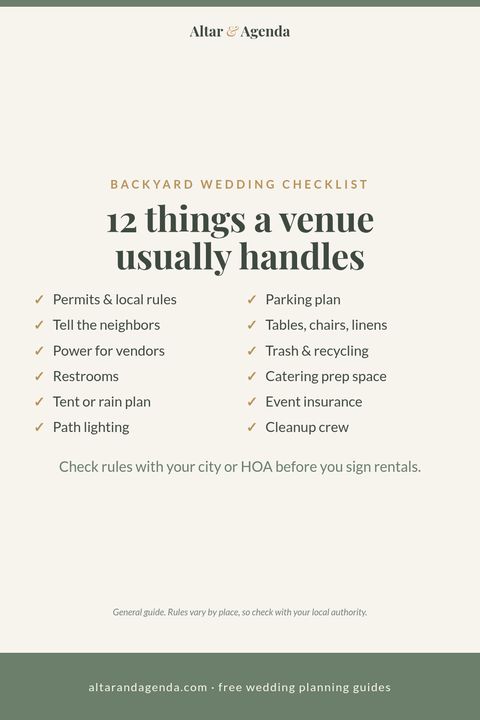
The catch: a yard isn't a venue until you've replaced everything a venue normally provides. Rental companies say the same items get forgotten again and again: extra tables for food service, serving equipment, restrooms, trash and lighting. This checklist goes through it all in the order you'll need it.
On this page
- Step 1: Check the rules before you spend anything
- Step 2: Measure the space and plan the layout
- Step 3: Plan for weather
- Step 4: Power, lighting and water
- Step 5: Restrooms
- Step 6: Rentals checklist
- Step 7: Food and drink
- Step 8: Neighbors and parking
- Step 9: The day and the day after
- Backyard wedding budget: what to plan for
- Frequently asked questions
- Want it done for you?
Step 1: Check the rules before you spend anything
Rules for private events vary by city, county and neighborhood, so ask before you book rentals:
- Local permits. Ask your city or county whether a private event at your address needs a permit at your guest count, and whether tents need one.
- Noise rules. Find out the quiet hours and any limits on amplified music.
- Alcohol. Ask whether serving alcohol needs a permit, and whether your bartender or caterer must be licensed and insured.
- HOA or landlord rules, if they apply.
- Insurance. Ask your home insurer what's covered and whether you need one-day event liability cover.
- Parking and street rules, especially if guests will park on the street.
Write down who you spoke to and what they said.
Step 2: Measure the space and plan the layout
- Walk the yard with a tape measure and sketch the ceremony, dinner, dancing, bar, food service and restroom areas.
- Ask your rental company to help size the tent, tables and dance floor for your guest count.
- Plan the guest route: arrival, ceremony, dinner, restrooms, exit. Check it's flat and safe for older guests and anyone in heels.
- Check delivery access: can a rental truck reach the yard, and where will it park?
Step 3: Plan for weather
- Decide on a tent or an indoor backup before you book anything else, and know the deadline for ordering it.
- Add sidewalls, heaters or fans depending on the season.
- Put flooring under the tent or dance floor if the ground is soft or uneven. Grass isn't a dance floor.
Step 4: Power, lighting and water
- Ask every vendor what power they need (caterer, DJ or band, lighting, photo booth) and whether your home's circuits can handle it. If not, rent a quiet generator and place it away from guests.
- Light the paths, restrooms, parking and bar, not just the dance floor.
- Water access for the caterer: food prep, washing up and handwashing.
Step 5: Restrooms
- Count the bathrooms in the house and decide whether guests will use them at all.
- If you rent, consider a restroom trailer with running water and lighting. Ask the rental company how many units you need for your guest count and how long the event runs.
- Stock extra toilet paper, hand soap, paper towels and a trash can.
Step 6: Rentals checklist
Think in three groups:
- For guests: tables, chairs, linens, place settings, glassware, bar, lounge seating, ceremony chairs.
- For vendors: prep tables, serving tables, chafing dishes or another way to keep food warm, serving utensils, a vendor meal area.
- For operations: trash and recycling bins with spare liners, signage, path lighting, extension cords, fire extinguisher, first-aid kit.
Confirm in writing who sets up and breaks down, delivery and pickup times, and who pays if anything is damaged (including tent stakes hitting irrigation lines or pipes).
Step 7: Food and drink
- Choose a caterer who's comfortable with off-site events, and ask what they need from you: kitchen access, power, water, tables and a prep tent.
- Plan the bar with a licensed bartender if possible.
- Order ice for drinks and for cooling, and decide where it'll be kept.
Step 8: Neighbors and parking
- Tell your neighbors the date, times and when music will end. An invitation or a small gift goes a long way.
- Plan parking: a nearby lot with a shuttle, a neighbor's driveway, or a parking attendant.
- Give guests a simple map on your wedding website.
Step 9: The day and the day after
- Make a wedding day timeline that starts with deliveries and ends with the last rental pickup.
- Name a day-of coordinator, paid or a trusted friend, who isn't the couple or a parent. Their job: vendors, problems and guests.
- Book cleanup. Decide who takes down décor, empties trash and returns rentals, and when.
- Pack a wedding day emergency kit with extra batteries, tape and a phone charger.
Backyard wedding budget: what to plan for
You'll save on a venue fee, but you'll add rentals and infrastructure. For context, couples who hired event rentals spent an average of $2,000 in 2025 (The Knot), and a backyard wedding usually rents more than most. Get rental, tent, restroom and generator quotes before you decide the backyard is the cheaper option, then put them in a budget. Our $15K wedding budget breakdown and free Wedding Budget Starter help you see the whole picture.
Frequently asked questions
Do I need a permit for a backyard wedding?
It depends on where you live. Some places require a permit for private events above a certain size, for tents, amplified music or alcohol, and others don't. Ask your city or county and any HOA before you book.
Is a backyard wedding cheaper than a venue?
Often, but not always. You skip the venue fee, but you add rentals, a tent, restrooms, power, parking and cleanup. Get quotes for all of them before you decide.
What do people forget for a backyard wedding?
Restrooms, trash and recycling, lighting, extra tables for food service, ways to keep food warm, power for vendors and a weather plan are the most common gaps.
How do I keep a backyard wedding from feeling like a party?
A clear ceremony space, a rented tent or arch, good lighting and a printed timeline make it feel like a wedding. A day-of coordinator keeps it running like one.
Want it done for you?
Our Complete Wedding Planner tracks the budget, guest list, vendors and a checklist dated from your wedding day. The Wedding Vendor Tracker keeps rental, tent and catering quotes side by side with payment due dates, and the Wedding Day Timeline builds a minute-by-minute schedule, including vendor arrivals.
Sources
- The Knot, 2026 Real Weddings Study data read-out: venues chosen by couples spending under $12,000, and the $10,000 at-home wedding example.
- The Knot, The Average Wedding Cost, According to The Knot Data: average event rental spend.
- Sierra Rental Company, Backyard Wedding Setup Guide: commonly forgotten items (food service tables, serving equipment, restrooms, trash, lighting) and setup time.
Disclosure: Altar & Agenda makes the templates linked above. This is a general guide; rules vary by place, so always check with your local authority.
Free: the Wedding Budget Starter spreadsheet
Type your total and guest count, and it splits your budget into 13 categories, tracks quotes and payments and flags anything over budget. Excel and Google Sheets.
Get the free budget spreadsheetFree 12-month checklist (no sign-up)Browse our planners on Etsy